
.webp?width=4517&height=3011&name=black-and-white-factory-industrial-plant-415945%20(compressed).webp)
At Wyatt Seal, we are proud to offer a range of high-quality Parker Hannifin metal seals designed to meet the most demanding sealing requirements. These seals are engineered to perform under extreme conditions, providing reliable solutions for applications where traditional elastomeric seals might not suffice. Choosing the right metal seal involves considering specific application requirements, including seal profiles, operating temperatures, and material compatibility. By understanding these elements, you can select the most suitable seal to ensure optimal performance and longevity in your critical sealing applications.
Metal Seal Profiles
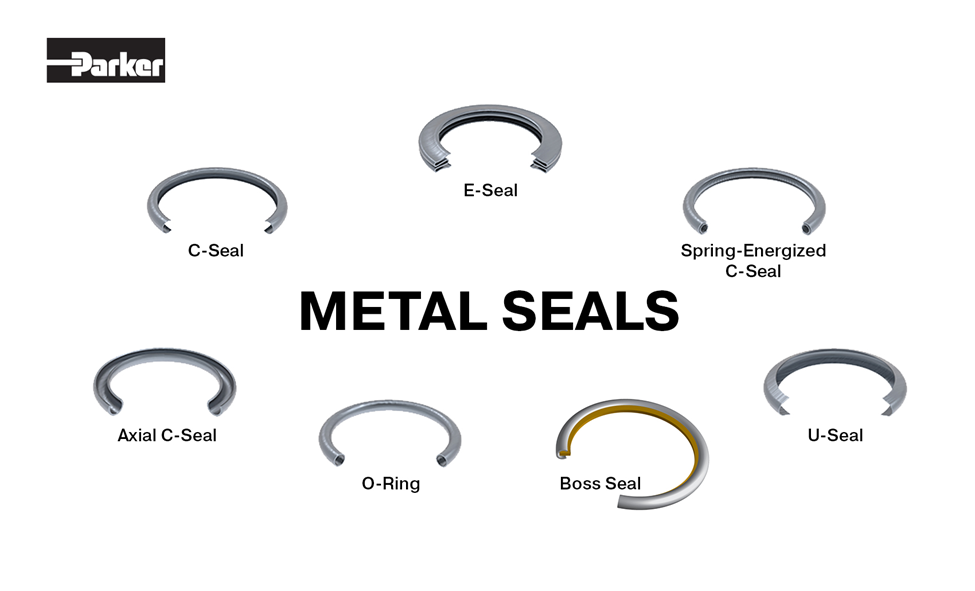
The profile of a metal seal is crucial, as it determines how well the seal can withstand different pressures, temperatures, and mechanical stresses, directly impacting its overall performance. Selecting the correct metal seal profile ensures a precise fit and optimal sealing, reducing the risk of leaks and failures in critical applications. Understanding the specific profile needed for your application is essential, as it influences the seal's ability to maintain integrity under varying environmental conditions and load demands. Discover Parker's innovative metal sealing profiles and learn when to use them for optimal performance in challenging applications:
C-Seal
- Use: Ideal for high-pressure and high-temperature applications.
- Features: Offers excellent resilience and is commonly used in aerospace and industrial gas turbines.
E-Seal:
- Use: Suitable for applications requiring high spring back and leak tightness.
- Features: Provides a higher level of elasticity compared to other metal seals, making it ideal for fluctuating pressures.
Spring Energized C-Seal:
- Use: Ideal for applications with moderate to high pressures where a high level of elasticity is required.
- Features: The spring energizes the seal, providing additional seating load and consistency.
U-Seal:
- Use: Versatile and used in a wide range of applications, including cryogenic and high-temperature environments.
- Features: Offers good sealing capabilities and durability.
Boss Seal (Metal):
- Use: Designed for sealing in high-pressure and high-temperature applications, particularly in hydraulic and pneumatic systems.
- Features: Ensures reliable sealing with excellent resistance to extreme conditions, commonly used in demanding industrial environments.
O-Ring:
- Use: Commonly used in static and dynamic applications across various industries.
- Features: Known for its simplicity and effectiveness in sealing a wide range of pressures and temperatures.
Axial C-Seal:
- Use: Best for static applications where axial compression is needed.
- Features: Excellent for sealing flanges and other components that require a tight seal under axial loads.
More information about metal seal profile options can be found in Parker's Metal Seal Design eHandbook.
Licensing for this image came with permission from the Parker Hannifin Media Manager collection.
Temperature and Pressure Considerations
Parker metal seals are engineered to withstand extreme temperatures and pressures. Selecting the right seal profile depends on the specific conditions of your application:
- High-Temperature Applications: C-seals, E-seals, and spring energized C-seals are designed to maintain sealing contact in extreme heat.
- High-Pressure Applications: Boss seals and C-seals are excellent choices for environments with high-pressure demands.
- Cryogenic Applications: U-seals perform well in extremely low temperatures, ensuring reliable sealing.
Plating Options for Enhanced Performance
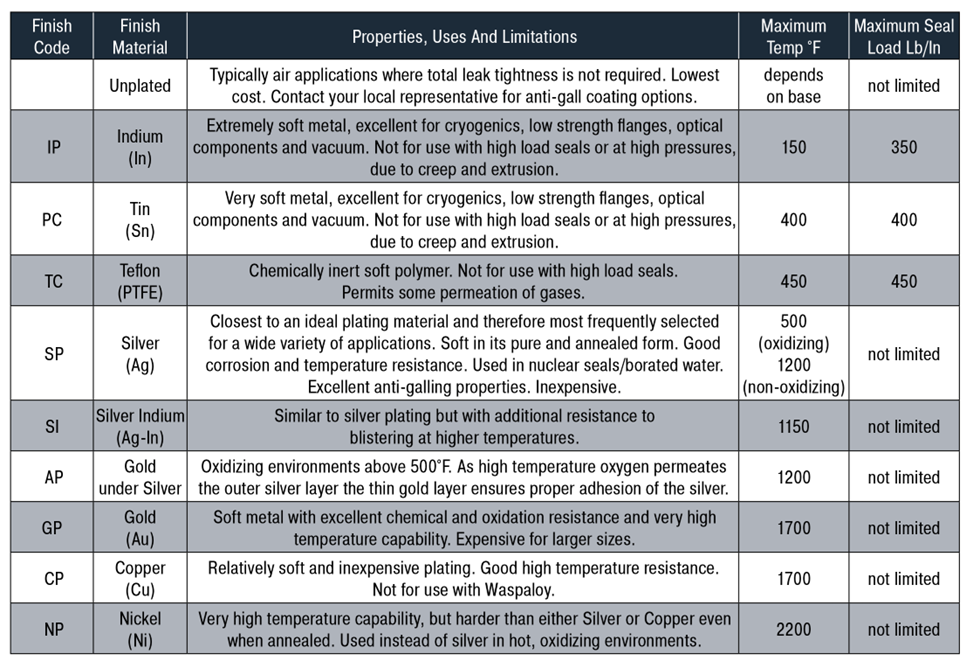
Parker metal seals can be plated with various materials to enhance their performance. Common plating options, along with their estimated maximum temperatures, are shown in the table below:
 Licensing for this image came with permission from the Parker Hannifin Media Manager collection.
To view this table and other helpful resources, explore Parker's Material Selection Process webpage as part of their Metal Seal Design eHandbook.
Achieve Peak Performance with the Right Parker Metal Seal
Choosing the right Parker metal seal requires a comprehensive understanding of your application's specific requirements, including temperature, pressure, and environmental conditions. Each metal seal profile offers unique benefits tailored to different operating scenarios, from high-pressure and high-temperature environments to cryogenic applications. Additionally, the choice of plating can further enhance seal performance and provide additional resistance to corrosion, oxidation, and extreme temperatures. To navigate these options and find the ideal solution for your needs, explore Parker's Metal Seal Design eHandbook.
If you need help navigating this process to find the right seal for your project, talk to a seal expert at Wyatt Seal. We’ve spent 50 years building relationships with seal manufacturers worldwide to offer you access to thousands of seals, gaskets, O-rings, and other specialty items for any application.