

Sealing Terms Glossary
A
Abrasion Resistance
A material’s ability to withstand surface wear from rubbing, scraping, or friction, especially important in dynamic or high-motion applications.
Adhesion
The ability of a material to bond effectively to another surface, critical for gaskets, coatings, and bonded sealing solutions.
AMS (Aerospace Material Specification)
Standards that define material properties, processing methods, and quality requirements for aerospace components.
AS568
A standardized O-ring size and dimension specification widely used in the U.S., ensuring compatibility and interchangeability across applications.
AS9100
A quality management standard for the aerospace industry based on ISO 9001, with added requirements specific to aerospace design, manufacturing, and safety.
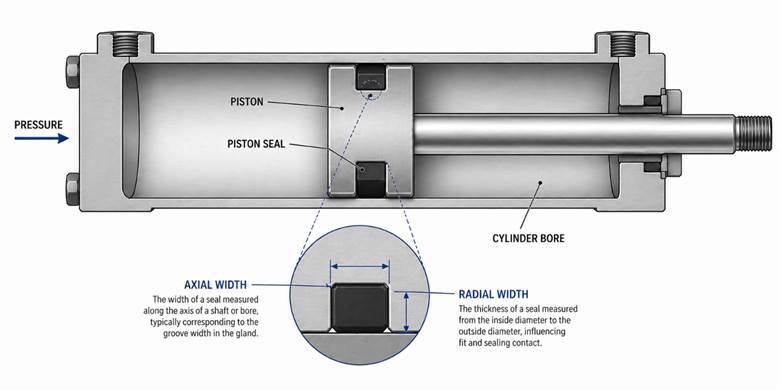
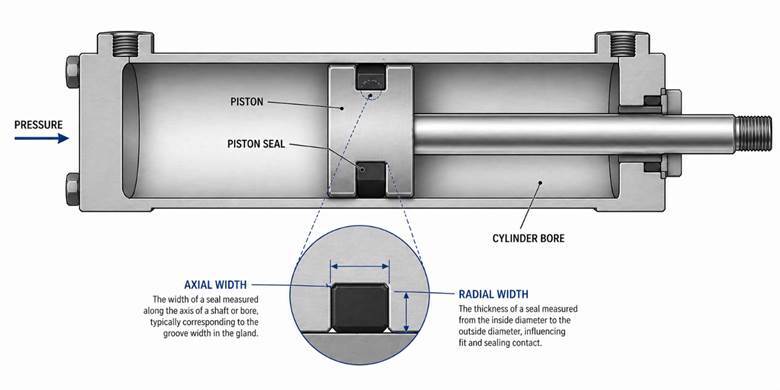
Axial Width
The width of a seal measured along the axis of a shaft or bore, typically corresponding to the groove width in the gland.
B
Batch Number (Lot Number)
A unique identifier assigned to a production run, used for traceability, quality control, and verification of material or process history.
Blanket Order
An order placed to cover multiple shipments over a period of time, often with flexible delivery dates and quantities.
Bloom
A whitish, powdery layer that can appear on elastomer parts caused by migration of additives, often cosmetic but sometimes indicative of material changes.
C
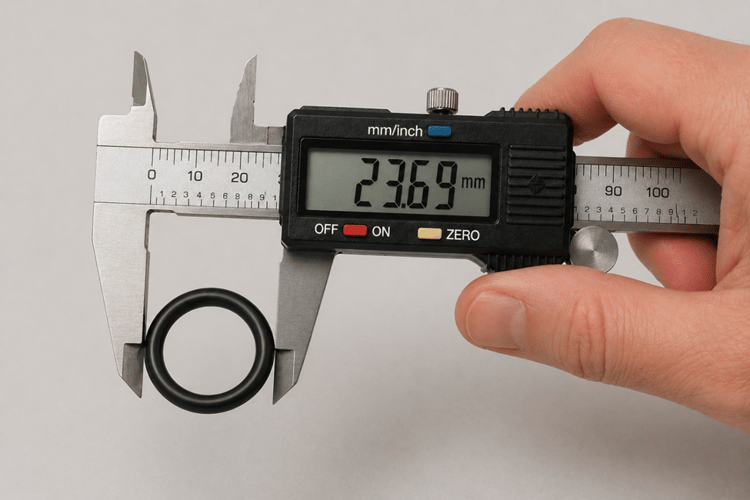
Calipers
Precision measuring tools used to check dimensions such as thickness, diameter, or groove width during inspection or assembly.
CMMC®
A certification framework that ensures contractors meet cybersecurity standards to protect controlled unclassified information in defense contracts.
COC (Certificate of Conformance)
A formal document certifying that a product meets all specified material, manufacturing, and quality requirements.
Compression Molding
A process where pre-measured material is placed into a mold and then compressed under heat to form the final part.
Compression Set
A measure of a material’s ability to return to its original thickness after long-term compression, impacting sealing reliability over time.
Conductive
A material that allows the flow of electrical current, often used for grounding, EMI/RFI shielding, or electrostatic control.
Country of Origin (COO)
The country where a product was manufactured or substantially transformed, often relevant for tariffs, trade agreements, and compliance reporting.
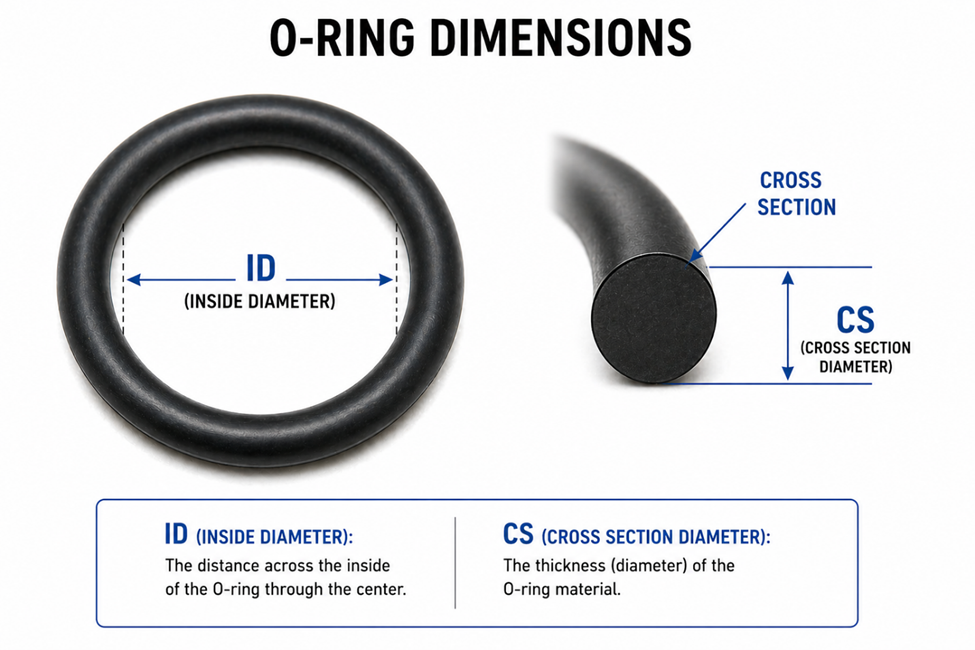
Cross-Section
The thickness of an O-ring or seal when cut and viewed from the side, which influences squeeze, fit, and sealing performance.
Cure
The chemical process that cross-links elastomer molecules, transforming raw rubber into a durable, functional sealing material.
Cure Date
The date a compound was molded and cured, used to track shelf life and ensure seals are used within their optimal performance window.
D
DFARS (Defense Federal Acquisition Regulation Supplement)
U.S. regulations governing defense-related procurement, ensuring contractor compliance with material, cybersecurity, and reporting requirements.
Durometer (Hardness)
A measure of a material’s resistance to indentation, typically expressed using the Shore A scale.
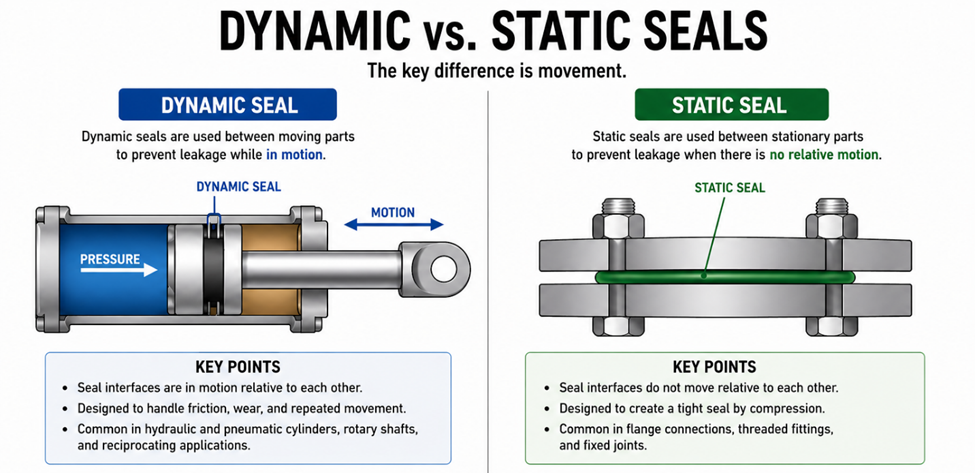
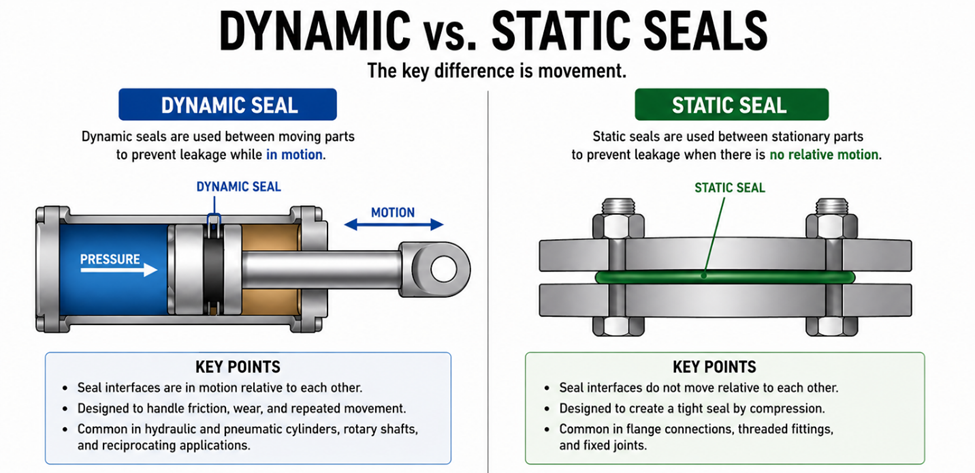
Dynamic Seal
A seal used between moving components, such as pistons or rotating shafts, requiring materials with wear resistance and low friction.
E
Elastomer
A flexible, rubber-like polymer used in seals, gaskets, and other components, including NBR, EPDM, FKM, and FFKM.
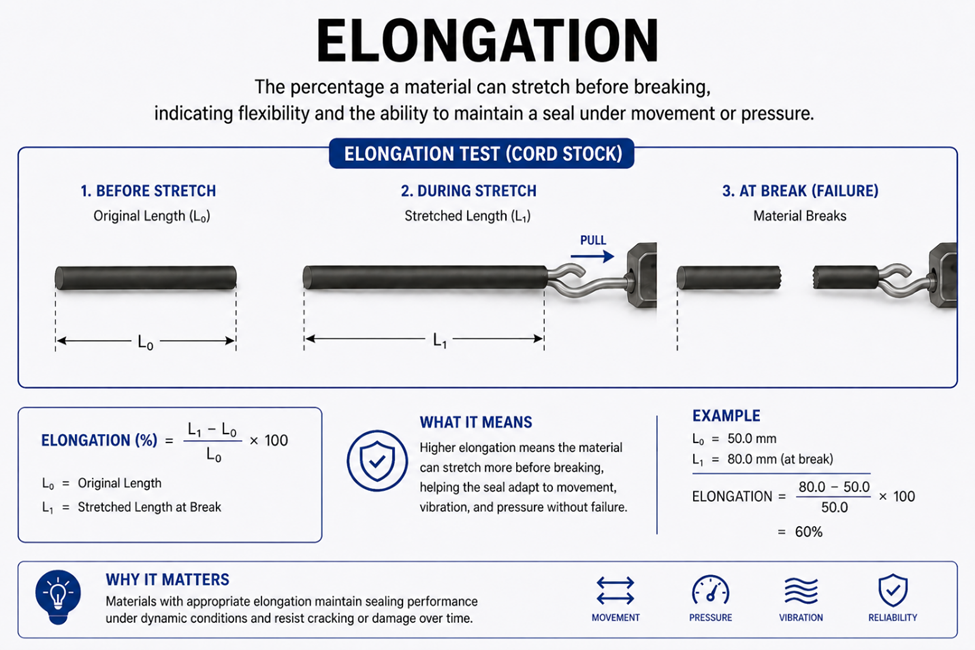
Elongation
The percentage a material can stretch before breaking, indicating flexibility and the ability to maintain a seal under movement or pressure.
EMI
Electromagnetic interference between electronic components or systems that can affect signal integrity.
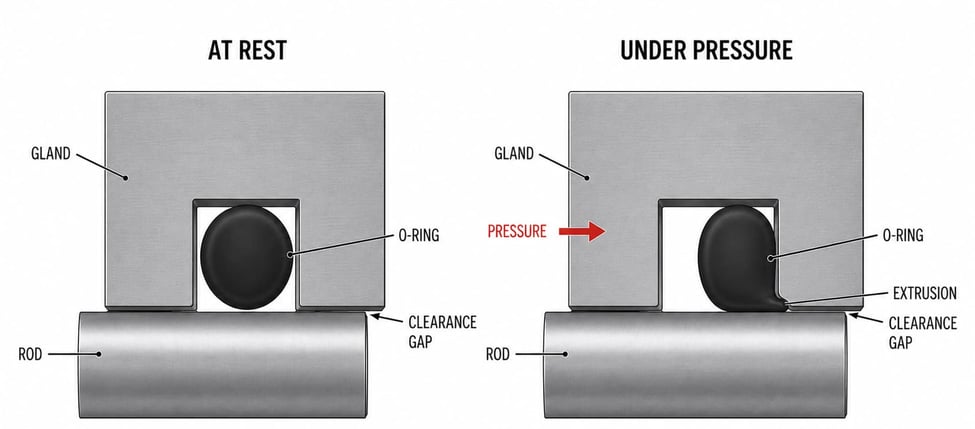
Extrusion
When seal material is forced into a gap under pressure, potentially causing damage or leakage; mitigated through proper gland design or backup rings.
F
FDA Compliance
Indicates that a material meets U.S. Food and Drug Administration requirements for safe contact with food or beverages.
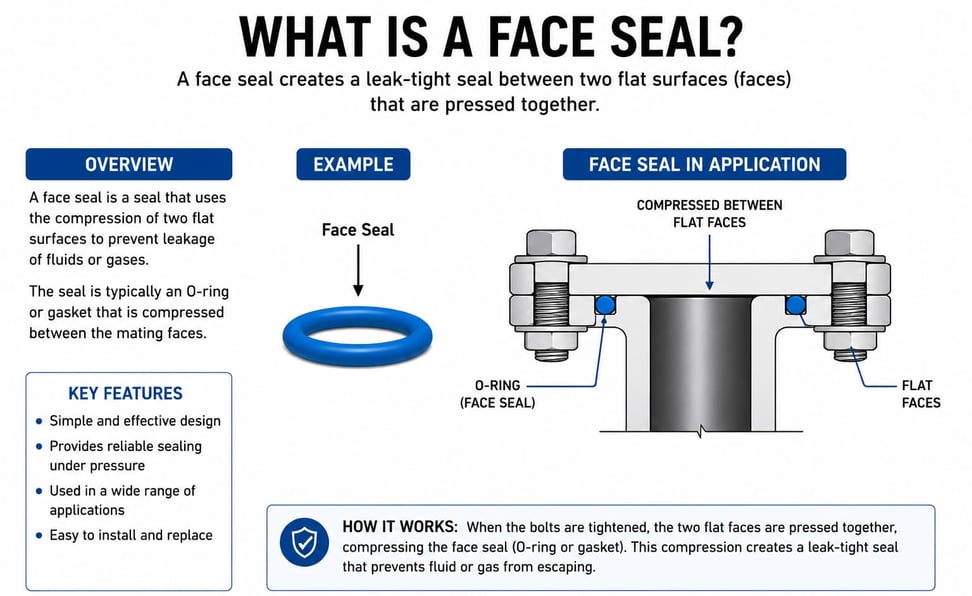
Face Seal
A seal placed between two flat, parallel surfaces, providing an effective barrier against leakage.
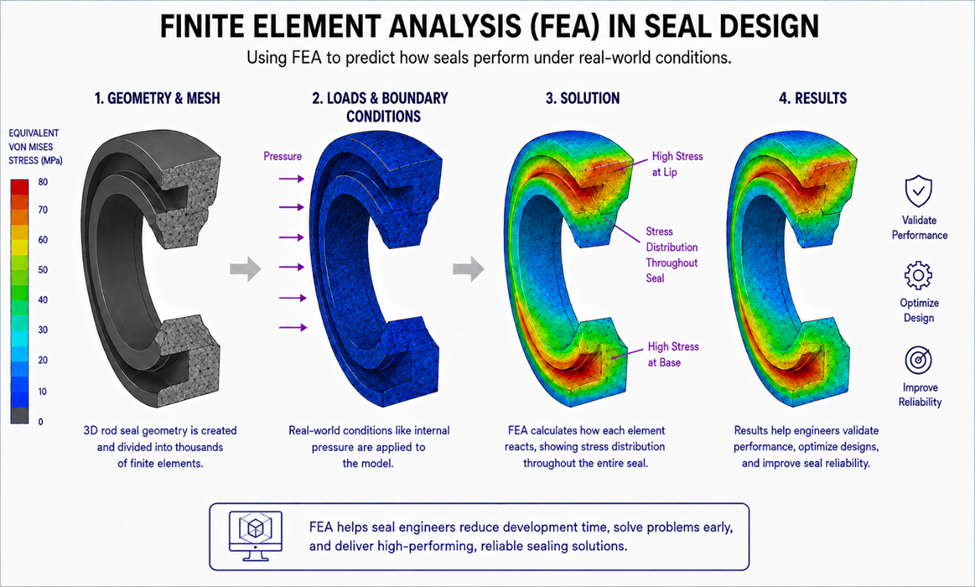
FEA (Finite Element Analysis)
A computer simulation method used to predict how seals or components perform under stress, pressure, and temperature conditions.
First Article Inspection (FAI)
A thorough inspection of the first part produced to verify it meets all design and specification requirements before full production.
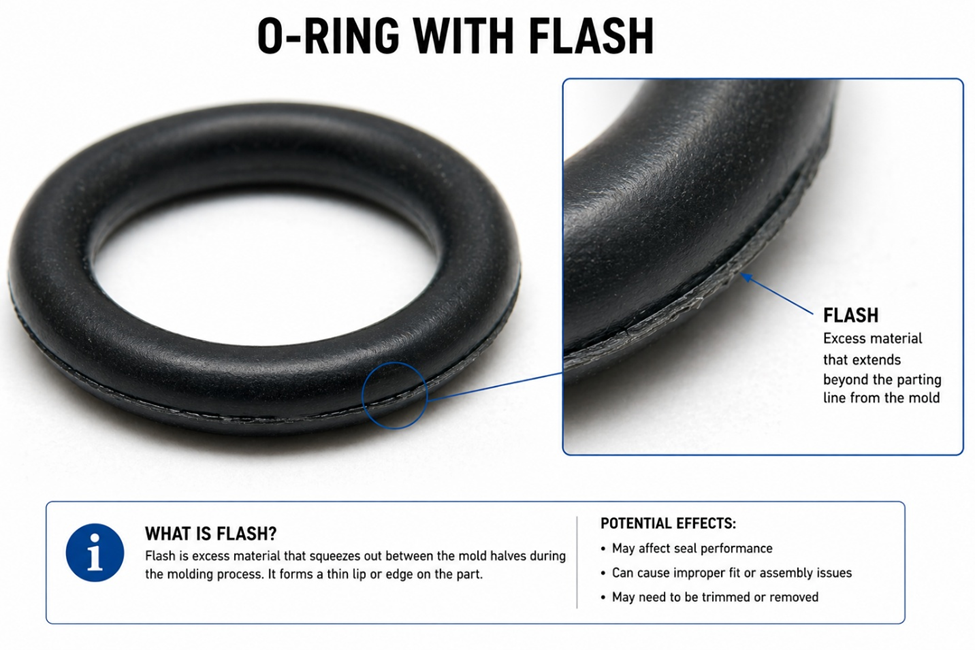
Flash
Excess material that forms along the edge of a molded part, typically trimmed during post-processing.
G
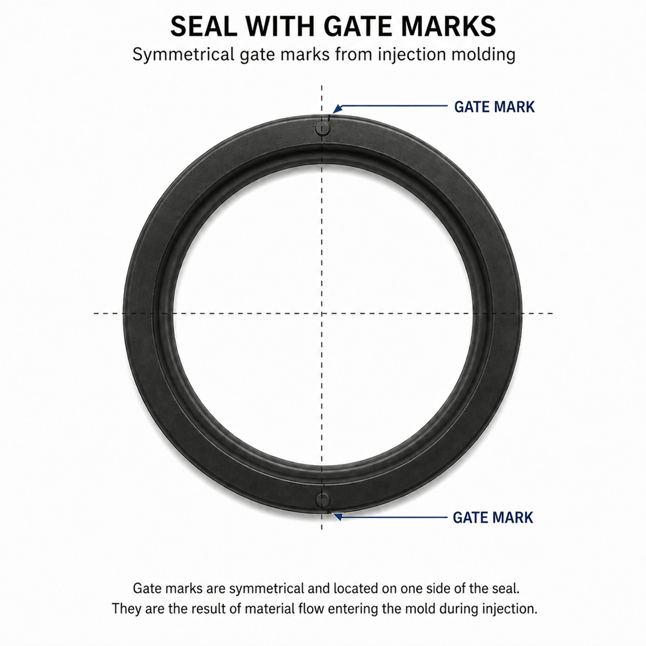
Gate Mark
A small mark on a molded part indicating where molten material entered the mold during manufacturing.
Gland
The groove or cavity where a seal is installed, designed to ensure proper compression and retention.
H
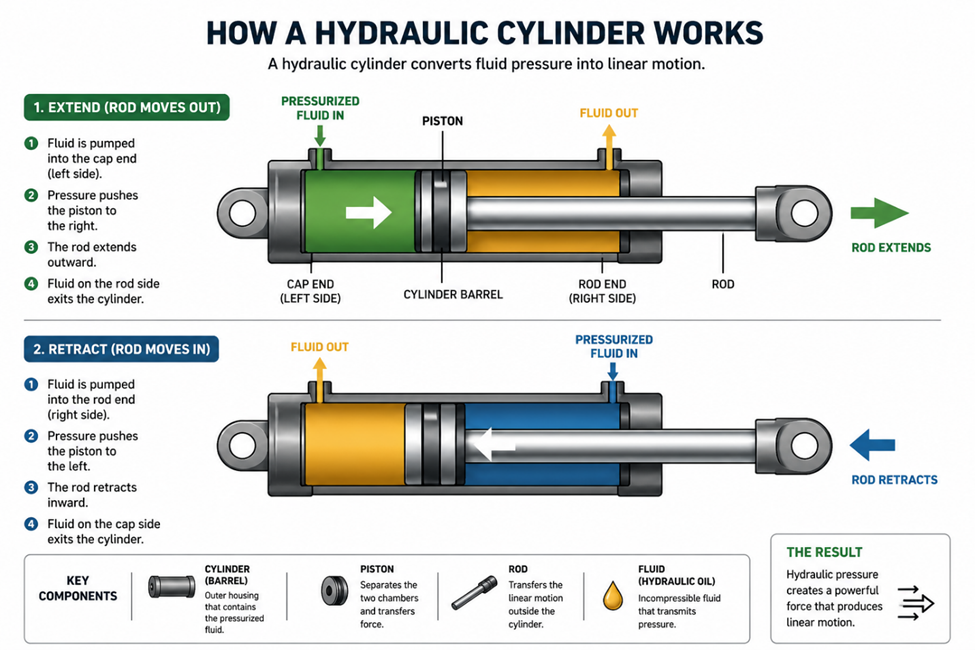
Hydraulic
Relating to systems that transmit power using pressurized fluids, often requiring robust, high-pressure seals.
Hydrolysis
The degradation of a material caused by prolonged exposure to water or moisture, leading to softening, cracking, or loss of strength.
I
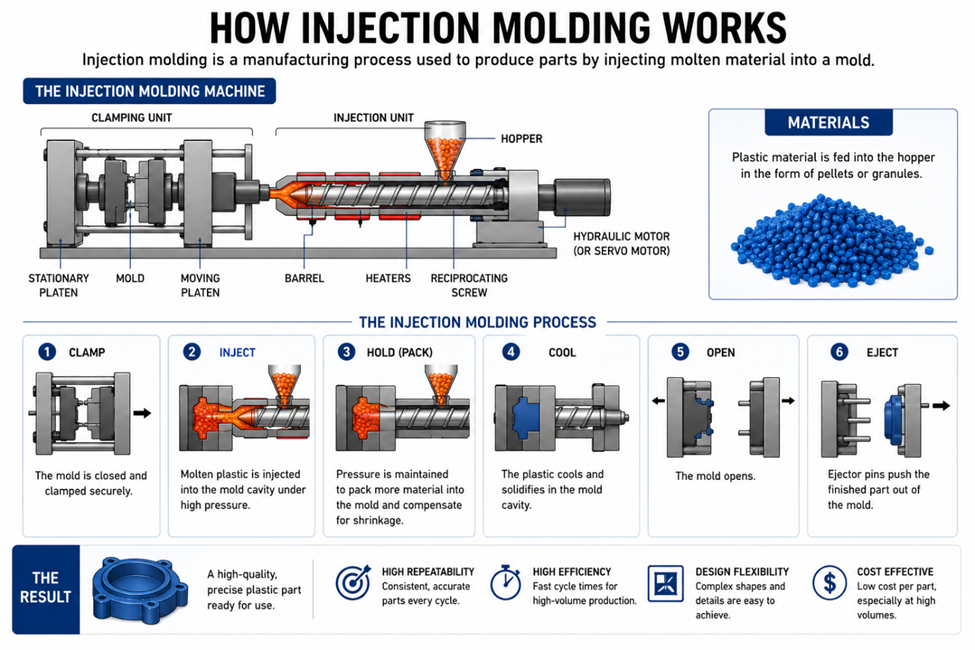
Injection Molding
A manufacturing process where molten material is injected into a mold cavity to form a part or seal.
ITAR (International Traffic in Arms Regulations)
U.S. regulations controlling the export, import, and handling of defense-related articles and technical data.
K
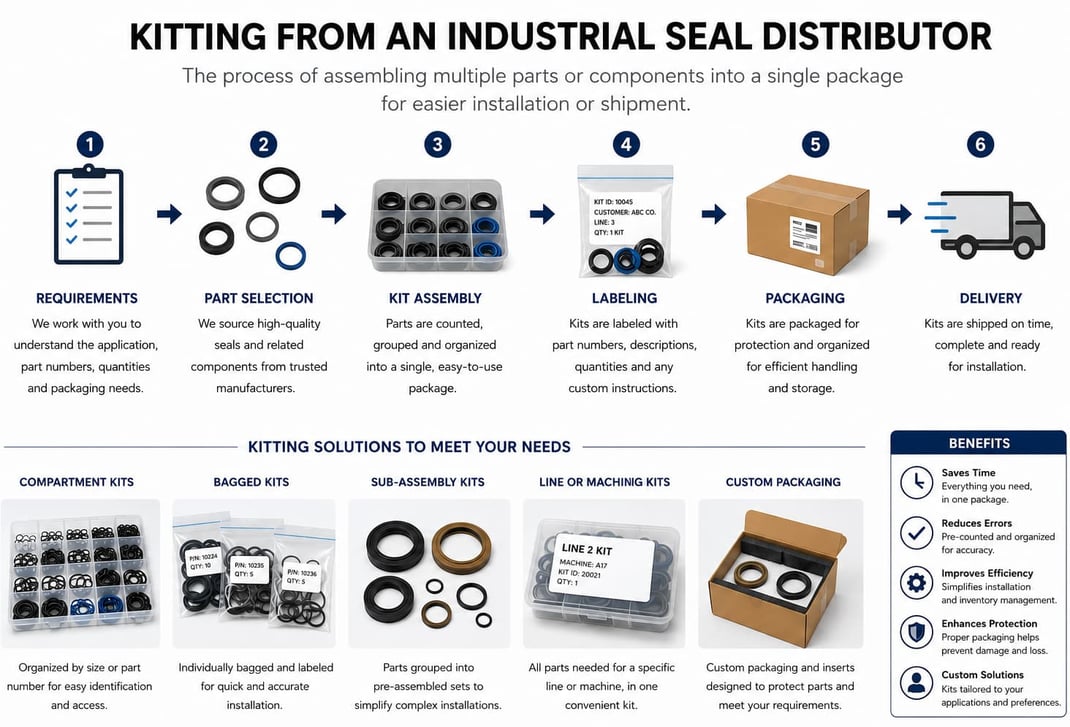
Kitting
The process of assembling multiple parts or components into a single package for easier installation or shipment.
L
Lubricity
A material property that reducesfriction between moving parts, improving wear resistance and operational efficiency.
M
Mil-Spec / MS (Military Specification / Military Standard)
U.S. Department of Defense specifications defining performance, material, and testing requirements for defense applications.
Modulus
A measure of a material’s stiffness or resistance to deformation under stress; often used to evaluate elastomer performance.
Mold Cavitation
The number of identical parts a single mold can produce at one time; multi-cavity molds produce multiple parts per cycle.
N
NAS (National Aerospace Standard)
Standards covering aerospace hardware, including seals, fasteners, and components, to ensure performance and interchangeability.
NORSOK®
Standards developed by the Norwegian petroleum industry to ensure safe, reliable products in offshore applications.
NSF®51 / NSF®61
Certification standards for materials in contact with food (NSF 51) or drinking water (NSF 61).
O
Obsolescence
The state of a material, product, or part that is no longer produced or supported, often requiring replacement or redesign.
Outgassing
The release of trapped gases from a material, which can affect vacuum or sensitive applications.
P
Permeability
The rate at which liquids or gases pass through a material, affecting containment and performance.
PFAS
Per- and polyfluoroalkyl substances, a class of fluorinated chemicals increasingly regulated due to environmental and health concerns.
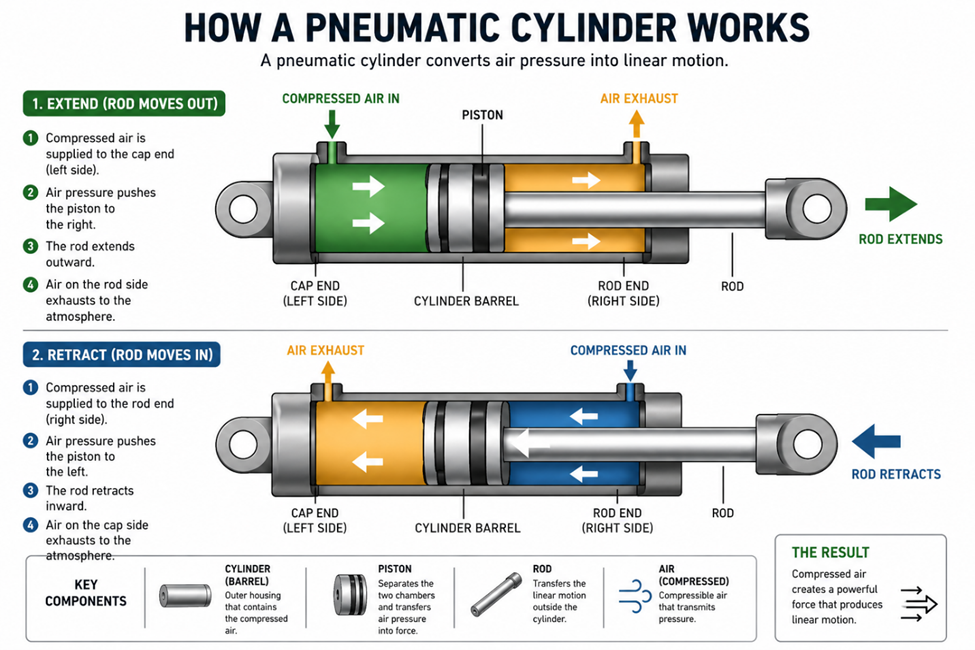
Pneumatic
Relating to systems that transmit power using compressed air or gas.
PPAP (Production Part Approval Process)
A standardized process ensuring that production parts meet engineering and quality specifications before approval.
Post Cure
A heat treatment applied after molding to complete curing and improve the material’s properties, like chemical resistance or hardness.
Pressure Rating
The maximum pressure a seal can withstand without leaking or failing.
Q
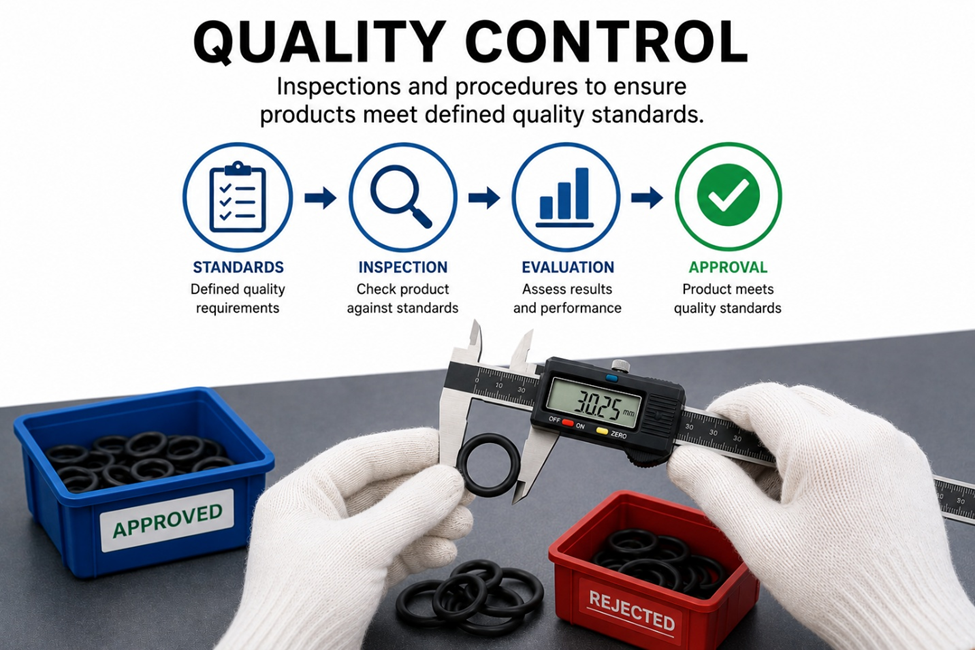
QC (Quality Control)
Inspections and procedures to ensure products meet defined quality standards.
R
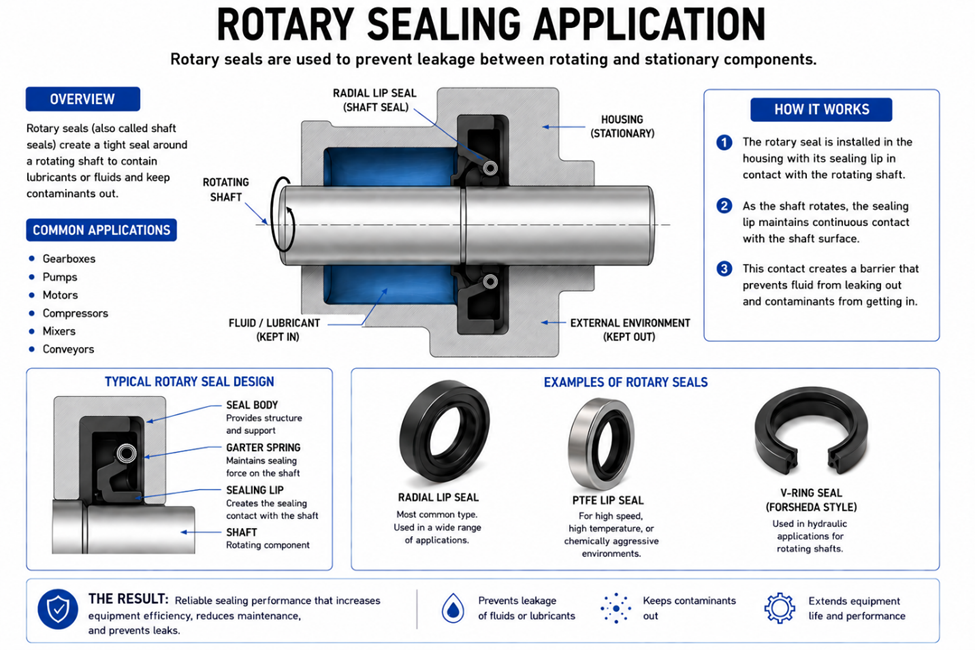
Radial Seal
A seal installed around a shaft or bore to prevent leakage between moving and stationary surfaces.
Radial Width
The thickness of a seal measured from the inside diameter to the outside diameter, influencing fit and sealing contact.
Regulatory Compliance
Verification that a product meets environmental, safety, and trade regulations, including REACH, RoHS, TSCA, USMCA, and PFAS.
RFI
Radio-frequency interference that can disrupt electronic signals.
Rotary
Involving rotational motion, such as rotating shafts or equipment.
S
SAE (Society of Automotive Engineers)
An organization that develops technical standards and specifications for automotive and industrial components.
Shelf Life
The period a seal can be stored without losing performance, influenced by material type and storage conditions.
Shore A
The most commonly used hardness scale for measuring elastomers.
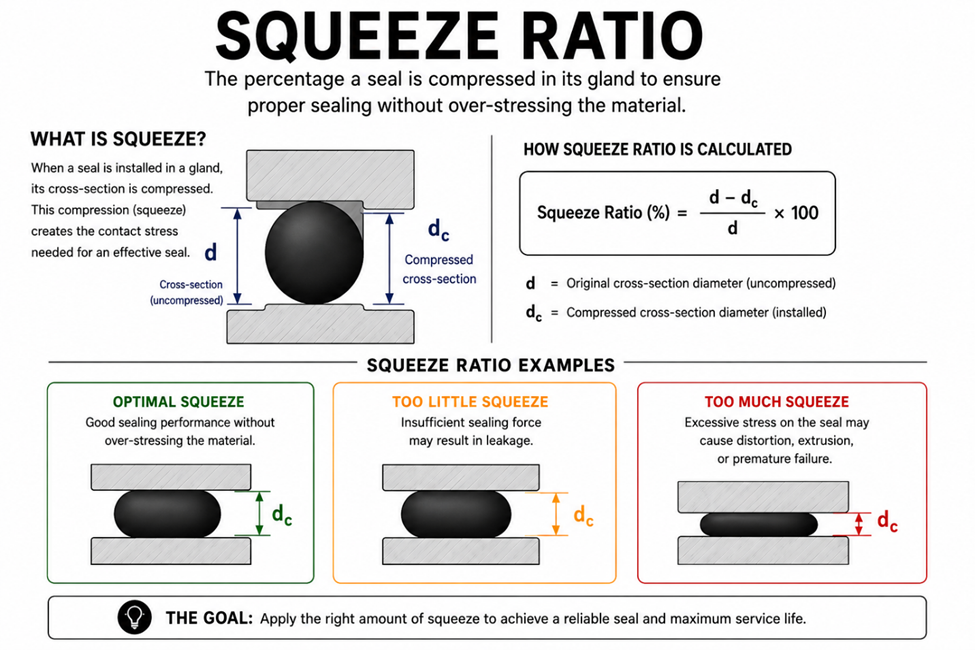
Squeeze Ratio
The percentage a seal is compressed in its gland to ensure proper sealing without over-stressing the material.
Source-Controlled
Materials or components supplied from approved, verified, or restricted sources to ensure quality and traceability.
Static Seal
A seal used between two non-moving surfaces, typically experiencing minimal wear.
Surface Finish
The texture or smoothness of a mating surface, which can affect sealing performance and longevity.
Swell
The expansion of a seal when it absorbs fluid, which can enhance sealing if controlled or cause failure if excessive.
T
Tariffs
Taxes or duties applied to imported or exported goods that can impact cost and sourcing decisions.
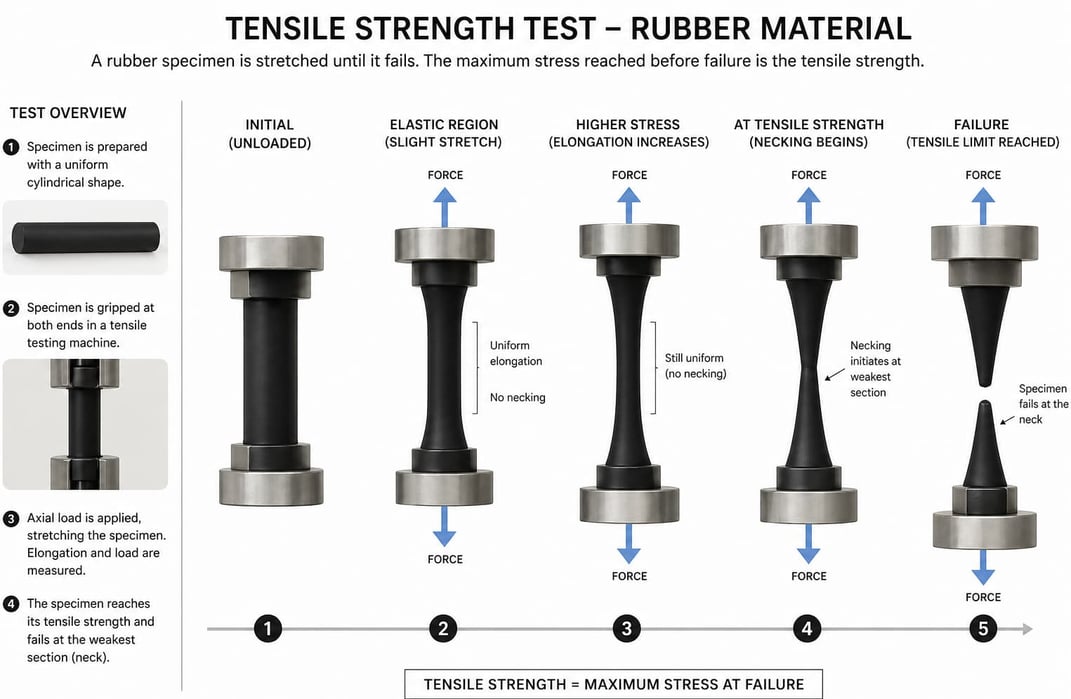
Tensile Strength
The maximum stress a material can withstand while being stretched before failure.
Thermal Expansion
The tendency of a material to expand when exposed to heat, which affects seal compression and performance.
Tolerance
The acceptable dimensional variation of a seal or component to maintain proper function.
U
UL® Listed
Tested and certified by Underwriters Laboratories to meet recognized safety and performance standards.
USP Class VI
A material classification indicating successful U.S. Pharmacopeia biological reactivity testing for medical applications.
V
Value-Added Services
Additional services beyond standard manufacturing, such as assembly, labeling, or custom packaging.